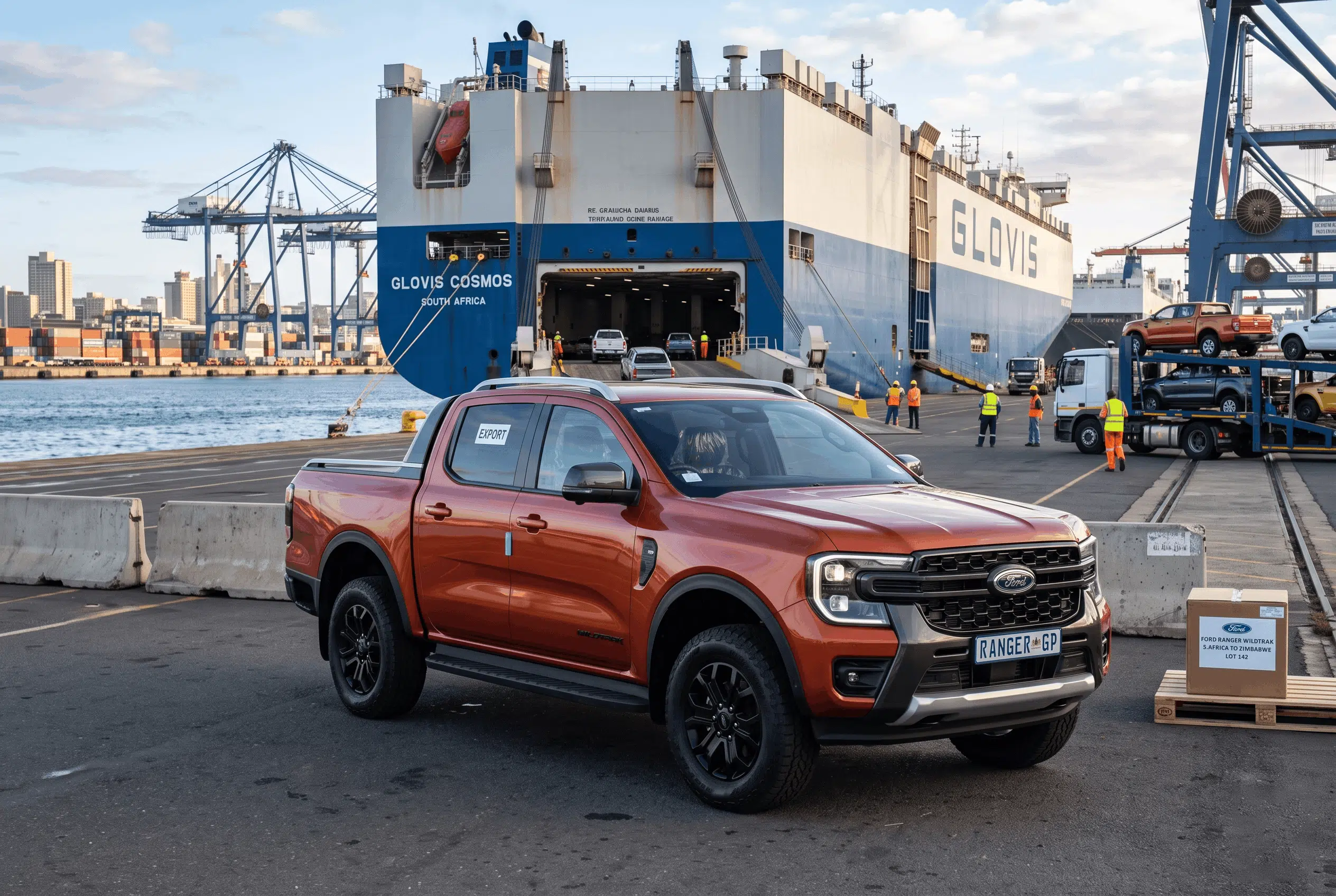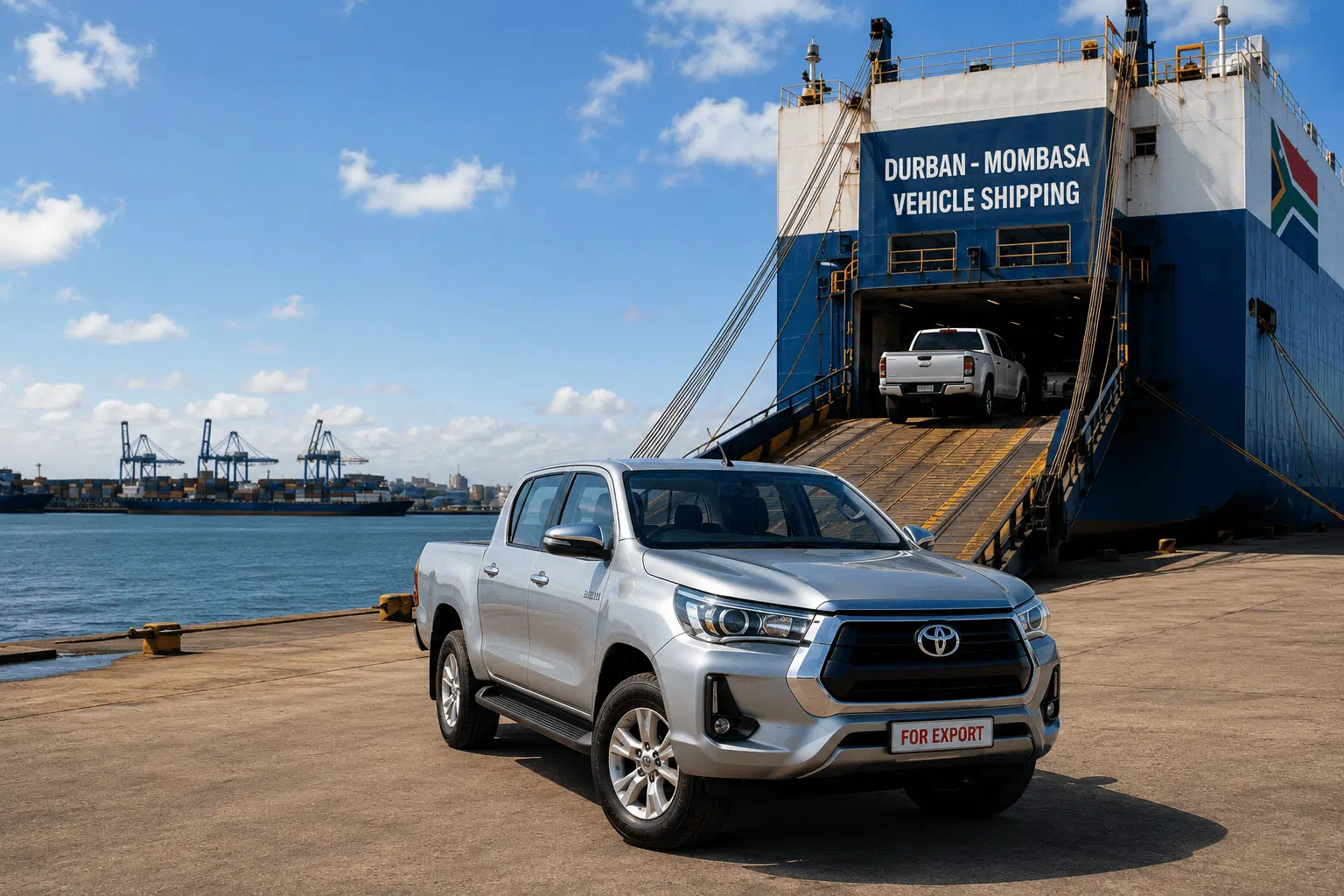


Uganda is a landlocked country, which means every vehicle imported from abroad arrives overland after passing through a neighbouring port, either Mombasa in Kenya or Dar es Salaam in Tanzania. For buyers sourcing from South Africa, this adds one logistical layer to the process, but it does not make the import difficult. Established shipping routes and well-documented customs procedures at both ports mean South Africa-to-Uganda imports happen regularly and predictably when the paperwork is handled correctly from the start.
South Africa has a compelling case as a sourcing market for Ugandan buyers. Vehicles are right-hand drive, which Uganda requires for standard private and commercial vehicles. Models popular across Uganda, including the Toyota Hilux, Toyota Land Cruiser, Toyota Fortuner, and Isuzu D-Max, are widely available with verified service histories and at competitive prices compared to Japanese or UAE auction channels. Physical inspection before export is possible, removing the remote-assessment risk that comes with buying through auction reports.
This guide explains the full import process from vehicle selection in South Africa through to registration in Uganda, including the current URA duty structure, documentation requirements, shipping options, and an important regulatory update proposed in April 2026 that buyers need to be aware of.
Important Regulatory Update: Proposed Age Limit Change in 2026
Before getting into the process, there is a significant regulatory development Ugandan buyers sourcing vehicles right now need to understand.
Uganda currently allows the import of used vehicles up to 15 years old from the date of first registration. This limit has been in place since July 2023, when Uganda introduced a 15-year cap under enforcement by the Uganda National Bureau of Standards.
In April 2026, the Ugandan government tabled the Traffic and Road Safety Amendment Bill as part of its 2026/27 tax proposals. This bill proposes to reduce the maximum import age limit from 15 years to 13 years, while also introducing a graduated environmental levy structure for vehicles aged between 9 and 12 years. A transitional rule in the proposal excludes vehicles already in transit before the law commences, provided they arrive in Uganda by 31 December 2026.
As of the time of writing, this is a proposed amendment and has not yet been enacted into law. However, buyers who are currently sourcing or planning to source vehicles should factor this proposal into their timing. If the amendment passes during 2026, vehicles first registered before 2013 would no longer be eligible for import. Consulting a licensed clearing agent in Uganda for the latest confirmed position before purchase is strongly recommended.
For vehicles from South Africa manufactured from 2013 onwards, the import remains straightforward under either the current or proposed rules.
Why South Africa Is a Good Sourcing Market for Ugandan Buyers
Uganda’s vehicle market has traditionally been dominated by Japanese imports. However, South Africa offers several practical advantages that are worth understanding before making a sourcing decision.
South Africa is a right-hand drive market, which aligns with Uganda’s requirement for standard vehicles. Vehicles sourced here do not require steering conversion. The models most commonly imported into Uganda, particularly heavy-duty pickup trucks and SUVs, are available in South Africa in large volumes with full dealer documentation.
Physical inspection before purchase is one of the clearest advantages. Unlike Japanese auction channels where condition is assessed through grading reports and remote photographs, South Africa allows a buyer’s representative or a sourcing partner to inspect the vehicle in person before any money changes hands. For a purchase in the range of tens of millions of Uganda shillings, this verification access is meaningful.
South African vehicles also come with English-language logbooks and documented service history from registered dealerships. This reduces documentation complications at Uganda customs compared to vehicles with foreign-language paperwork requiring translation.
For a broader comparison between South Africa and Japanese sourcing markets across cost, documentation, and suitability for African roads, this guide covers both in detail: Japan vs South Africa Car Imports: Which Is Better for African Buyers
Step 1: Selecting the Right Vehicle
The first step is choosing a vehicle that meets Uganda’s import requirements and suits your specific use.
The most commonly imported vehicles from South Africa into Uganda and the wider East Africa region include:
- Toyota Hilux (double cab 4×4 for commercial and rural use)
- Toyota Land Cruiser (70 Series for commercial fleets, 200 Series for private)
- Toyota Fortuner (private and business SUV use)
- Isuzu D-Max (commercial and agricultural)
- Ford Ranger (commercial and personal)
- Nissan Navara (commercial)
Before committing to any vehicle, confirm the following:
- First registration date places the vehicle within Uganda’s current 15-year age limit, and ideally within 13 years given the proposed amendment
- VIN and engine numbers match registration documents exactly
- No outstanding finance registered against the vehicle
- The vehicle has not been written off or flagged
- Service history is documented and consistent
You can browse verified used inventory currently available through Kalali Motors here: Used Cars
New vehicle options are also available for buyers who want to avoid age-limit concerns entirely: New Cars
Step 2: Pre-Export Inspection in South Africa
Uganda requires all imported used vehicles to undergo a Pre-Export Verification of Conformity inspection, known as a PVoC inspection, before shipment. This inspection verifies that the vehicle meets Uganda’s roadworthiness standards and confirms compliance with the age requirement.
The Uganda National Bureau of Standards has appointed approved inspection companies to carry out PVoC inspections in South Africa. The inspection covers vehicle condition, emissions compliance, safety checks, and confirmation that documentation matches the physical vehicle.
The inspection typically costs between USD 150 and USD 250. A PVoC certificate is issued upon successful inspection and must accompany the vehicle’s documentation throughout the shipping and clearance process. Vehicles arriving without this certificate face clearance delays and potential rejection.
If you are working with an experienced export facilitator, they will coordinate the PVoC inspection as part of the export preparation. Managing this independently requires booking with an approved inspection company in South Africa before the shipping date is confirmed.
Step 3: South Africa Export Compliance
Every vehicle leaving South Africa for export must pass through a mandatory South African Police Service clearance before it can be loaded for shipping. An SAPS officer physically inspects the vehicle, verifies the VIN and engine numbers against national records, and confirms the vehicle is not stolen or flagged in any way. This applies to every vehicle without exception and typically takes three to seven working days.
Following police clearance, export documentation is prepared. This includes converting the vehicle’s registration status for export and preparing all compliance paperwork required for cross-border transit.
The export documentation process is explained in detail here: Documents Required to Export a Car from South Africa
The full export procedure from South Africa is covered here: Export Procedure
For SADC-routed vehicles passing through Zimbabwe or Zambia in transit, SARPCCO clearance may also be relevant depending on the routing. This process is explained here: Complete Guide to SARPCCO Clearance for Vehicle Export from South Africa
Step 4: Shipping from South Africa to Uganda
Because Uganda is landlocked, all sea freight arrives through one of two East African ports: Mombasa in Kenya or Dar es Salaam in Tanzania. Both are viable options and the choice between them is primarily based on cost, timing, and the buyer’s preference for onward road transport routing.
Mombasa route: Vehicles shipped from Durban arrive at Mombasa’s Kilindini Harbour, then travel by road through Kenya into Uganda, typically entering at Malaba or Busia border posts. The Mombasa port is the most commonly used option for Uganda-bound vehicles.
Dar es Salaam route: Vehicles arrive at Dar es Salaam port in Tanzania, then travel northward by road into Uganda. This route may offer scheduling advantages depending on vessel availability at the time of shipment.
Sea transit from the Port of Durban to either Mombasa or Dar es Salaam takes approximately 10 to 14 days. The total shipping cost from Durban to Mombasa or Dar es Salaam for a single container typically ranges between USD 800 and USD 1,500 depending on the season, shipping line, and container type.
For an explanation of the two main shipping methods and which suits your vehicle and budget, this guide covers both in detail: RORO vs Container Shipping from South Africa
Marine insurance during transit is mandatory and typically costs 1 to 2 percent of the vehicle’s CIF value. Do not proceed without it.
Step 5: Understanding URA Import Duty and Total Cost
Uganda’s duty structure for imported vehicles involves multiple levies stacked on the CIF value. The CIF value is the combined cost of the vehicle purchase price, marine insurance, and freight charges to the Ugandan border.
The URA determines customs value using a monthly motor vehicle value guide published on its portal. This is not simply your invoice price. If the declared value appears low relative to the URA reference, the authority may adjust the valuation upward. Using a realistic purchase price and accurate freight figures in your documentation avoids reassessment disputes at clearance.
The confirmed duty structure from the Uganda Revenue Authority for standard passenger vehicles and pickup trucks is:
| Levy | Calculation Basis | Rate |
|---|---|---|
| Import Duty | CIF value | 25% |
| VAT | CIF value plus Import Duty | 18% |
| Withholding Tax | CIF value | 6% |
| Infrastructure Levy | CIF value | 1.5% |
| Environmental Levy | CIF value (vehicles 8 years and older) | 20% of CIF |
The environmental levy of 20 percent of CIF applies to vehicles aged 8 years and older at the time of import. For vehicles under 8 years old, this levy does not apply. This is a significant cost consideration when selecting between a newer and an older used vehicle.
Note that the 2026/27 tax amendment proposals also include a graduated environmental levy structure for vehicles aged 9 to 12 years, ranging from 20 to 50 percent. This has not yet been confirmed into law, but buyers sourcing older vehicles should monitor this development through the URA website or a licensed clearing agent.
As a practical example using confirmed current rates: for a used Toyota Hilux double cab with a CIF value of USD 15,000 arriving in Kampala, import duty would be USD 3,750, VAT approximately USD 3,375, withholding tax USD 900, infrastructure levy USD 225, and environmental levy USD 3,000 if the vehicle is 8 years or older. Total duties and taxes on this example exceed USD 11,250, which represents roughly 75 percent of the vehicle’s CIF value. Always use the URA Motor Vehicle Import Duty Calculator at ura.go.ug for an estimate specific to your vehicle before purchase.
Working with a licensed URA clearing agent is the most reliable way to confirm your exact duty position before committing to a shipment.
For a broader understanding of what importing from South Africa costs before Uganda-side duties are applied, this breakdown covers all South Africa-side costs: How Much Does It Cost to Import a Car from South Africa?
Step 6: Customs Clearance in Uganda
Once your vehicle arrives at Mombasa or Dar es Salaam, customs clearance can be initiated either at the port or at Uganda’s inland container depots. Most buyers use a licensed clearing agent to process this step, and for Uganda-bound vehicles clearing through Mombasa, the clearing agent handles both the Kenyan port release and the Ugandan customs formalities.
The URA now processes all import declarations through its online customs management system. Manual clearance has been phased out. Your clearing agent will submit the import declaration digitally and coordinate payment of all applicable duties and levies.
Documents required for customs clearance in Uganda:
- Original South African logbook in English
- PVoC certificate from approved inspection company
- Bill of lading
- Commercial invoice or bill of sale
- Import Declaration Form
- Your Uganda Revenue Authority Tax Identification Number
- Certificate of roadworthiness
- Marine insurance certificate
The physical vehicle is inspected by URA customs officers upon arrival to verify that it matches the submitted documentation. Any discrepancy between declared and physical details results in delays, fines, or in serious cases, return of the shipment.
Clearing and forwarding agent fees typically range between UGX 500,000 and UGX 1,500,000 depending on the agent and complexity of the clearance.
Step 7: Registration in Uganda
After customs clearance and payment of all duties, the vehicle is registered with the Uganda Revenue Authority to receive Ugandan licence plates and a local logbook.
Registration fees for standard motor vehicles are UGX 100,000. Commercial motor vehicle registration is UGX 200,000. These figures are from the 2026/27 tax proposals and may be subject to confirmation once the amendment bills are passed.
Full Timeline: South Africa to Uganda
Understanding the realistic timeline from purchase to registration in Kampala helps you plan your import without unnecessary pressure at any stage.
| Stage | Estimated Duration |
|---|---|
| Vehicle selection and verification | 3 to 7 days |
| PVoC pre-export inspection in South Africa | 4 to 7 working days |
| Police clearance in South Africa | 3 to 7 working days |
| Export documentation preparation | 3 to 5 days |
| Sea freight: Durban to Mombasa or Dar es Salaam | 10 to 14 days |
| Road transport from port to Uganda border | 2 to 4 days |
| URA customs clearance | 5 to 10 working days |
| URA registration | 3 to 5 days |
| Total realistic range | 6 to 9 weeks |
The most common cause of delays is documentation that is incomplete or inconsistent. A vehicle arriving at the port with a full, accurate document set moves through clearance significantly faster than one with any paperwork gaps.
For a detailed breakdown of each stage in the South Africa export timeline, this guide covers it step by step: How Long Does It Take to Import a Car from South Africa?
Related Country Import Guides
If you are also researching imports through neighbouring countries or comparing routes, these guides cover the specific requirements at each destination:
- Importing to Tanzania: How to Import a Car from South Africa to Tanzania
- Importing to Kenya: How to Import a Car from South Africa to Kenya
- Importing to Zambia: How to Import a Car from South Africa to Zambia
- Importing to Zimbabwe: How to Import a Car from South Africa to Zimbabwe
- All export destinations: Countries We Export To
How Kalali Motors Supports Uganda-Bound Buyers
Kalali Motors handles the South Africa side of the export process end to end for Uganda-bound buyers. That includes vehicle sourcing across a verified network of over 6,000 suppliers, physical inspection coordination, PVoC inspection arrangement, police clearance management, and full export documentation preparation.
The team has practical experience with both the Mombasa and Dar es Salaam routing options for landlocked East African destinations, and can advise on which makes more logistical sense for your specific shipment timing and vehicle type.
Jubilate Lema, Kalali Motors’ managing director, has built an established network across East Africa through years of cross-border vehicle export work, including regular shipments to Uganda and the wider EAC market.
You can explore the full range of export and compliance services here: Export Paperwork and Compliance
For specific questions about your vehicle, preferred specification, or the current regulatory position on Uganda’s age limit proposals, contact the team directly: Contact Kalali Motors
Uganda currently prohibits the import of used vehicles older than 15 years from the date of first registration, enforced since July 2023. However, the Ugandan government tabled a Traffic and Road Safety Amendment Bill in April 2026 proposing to reduce this limit to 13 years, with a graduated environmental levy on vehicles aged 9 to 12 years. This proposal had not been enacted into law at the time of writing. Buyers sourcing vehicles now should factor this proposed change into their timing and consult a licensed URA clearing agent for the latest confirmed position.
Uganda’s duty structure for standard vehicles includes import duty of 25 percent of CIF value, VAT of 18 percent of CIF plus import duty, withholding tax of 6 percent of CIF, and an infrastructure levy of 1.5 percent of CIF. Vehicles aged 8 years and older also attract an environmental levy of 20 percent of CIF. Combined, total duties and taxes can represent 50 to 75 percent of the vehicle’s CIF value depending on age and specification. Use the URA Motor Vehicle Import Duty Calculator at ura.go.ug for a figure specific to your vehicle before purchase.
Left-hand drive vehicles are not permitted for standard private or commercial import into Uganda. South Africa is a right-hand drive market, so standard passenger vehicles and pickup trucks sourced here already meet this requirement without modification.
Uganda-bound vehicles from South Africa are shipped to either Mombasa port in Kenya or Dar es Salaam port in Tanzania. Both are established routes. Mombasa is the most commonly used. From Mombasa, vehicles travel by road into Uganda through the Malaba or Busia border posts. From Dar es Salaam, the road route passes northward through Tanzania into Uganda. The choice between ports depends on vessel scheduling, road transport cost at the time of shipment, and the buyer’s preferred routing.
Yes. Uganda requires all imported used vehicles to carry a Pre-Export Verification of Conformity certificate issued by a UNBS-approved inspection company in the country of export before shipment. For South Africa-sourced vehicles, this inspection takes place in South Africa before the vehicle is loaded. Vehicles arriving without a valid PVoC certificate face clearance delays and potential rejection at the Ugandan border.
The full process from purchase to registration in Uganda realistically takes 6 to 9 weeks. Sea transit from Durban to Mombasa or Dar es Salaam takes 10 to 14 days. Pre-export processing in South Africa, including police clearance and PVoC inspection, takes approximately two weeks. Road transport from the port to Uganda, customs clearance, and registration add a further two to three weeks. Documentation problems are the primary cause of delays beyond this range.
You need the original South African logbook in English, the PVoC certificate from an approved inspection company, the bill of lading, commercial invoice, Import Declaration Form, your URA Tax Identification Number, certificate of roadworthiness, and marine insurance certificate. Your clearing agent will also require your identification documents to process the URA customs declaration.