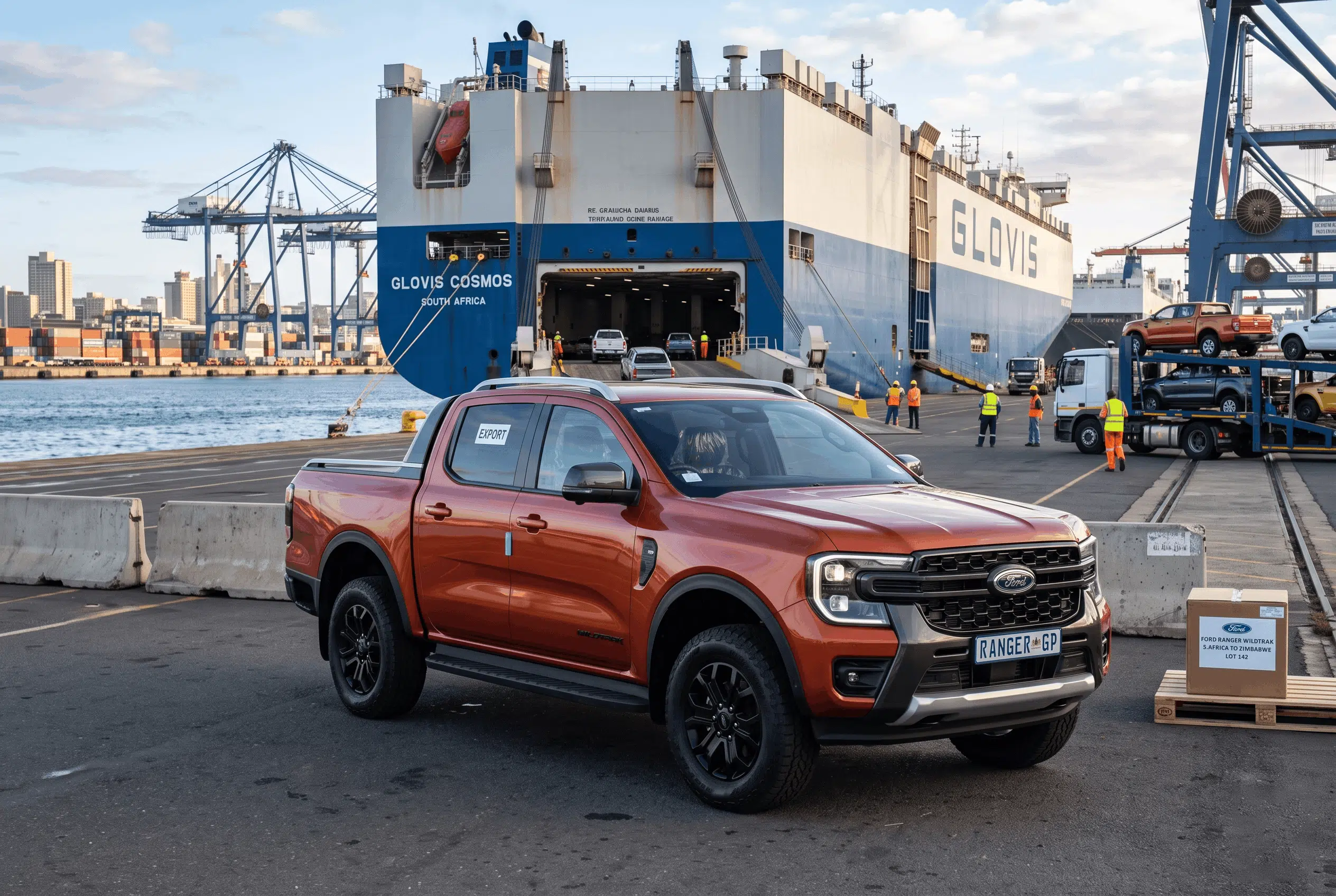

The Ford Ranger is South Africa’s second best-selling pickup truck. In 2025, it sold 7,933 units in just the first four months of the year, trailing only the Toyota Hilux. Among double cab buyers specifically, the Ranger actually led the market with 6,600 units sold in the same period, more than any other bakkie in that body style. It is built at Ford’s Silverton plant in Pretoria, comes in a wide range of specifications, and is available in right-hand drive as standard across the entire South African range.
For buyers across SADC and EAC markets, the Ranger offers something the Hilux does not: a more feature-rich interior, a higher standard of driver technology across mid-range variants, a higher towing capacity on 3.0L V6 derivatives, and in 2026, an entirely new powertrain choice with the introduction of the 2.3-litre EcoBoost petrol engine. This does not make the Ranger a better vehicle than the Hilux in absolute terms. It makes it the right vehicle for a different type of buyer.
This guide covers the full 2026 Ford Ranger range available in South Africa, confirmed pricing across all body styles, the engine and variant comparison that matters most for African buyers, how the Ranger compares to the Hilux for export purposes, and the complete export process from South Africa to your destination country.
What Changed in the 2026 Ford Ranger South Africa Range
Ford South Africa announced significant changes to the Ranger lineup in November 2025, with the updated range going on sale in May 2026. Buyers sourcing a Ranger now need to understand these changes because they affect the available engine options, transmission choices, and variant naming across the entire product line.
The 2.0-litre BiTurbo diesel has been discontinued. This engine powered some of the most popular export-spec Rangers for several years. It has been replaced by the expanded availability of the 3.0-litre V6 turbodiesel across more variants, offering meaningfully more power and torque for buyers who previously chose the BiTurbo for its performance.
The 2.3-litre EcoBoost petrol engine is new to the Ranger. Producing 222kW and 452Nm, this is the most powerful non-Raptor engine now available in the South Africa Ranger lineup. It is available in Sport and Wildtrak Super Cab and Double Cab configurations. For markets where diesel availability is inconsistent, this is now a genuine high-performance petrol alternative.
The 2.0-litre SiT diesel has been upgraded. The 2.0 SiT now uses a timing chain rather than a timing belt, improving long-term durability. Automatic versions now use a 10-speed transmission rather than the previous 6-speed unit.
A new Ranger Sport variant has joined the lineup. Positioned between the XLT and Wildtrak, the Sport is available in Super Cab and Double Cab configurations with either the 2.3L EcoBoost 4×2 or the 3.0L V6 turbodiesel 4×4.
The Ranger Raptor continues unchanged. The 292kW/583Nm 3.0L twin-turbocharged V6 petrol flagship is imported from Thailand rather than built locally. It is the performance halo product and at R1,299,000 new, it sits in a different price category from the rest of the range.
The 2026 Ford Ranger Range: All Variants and Body Styles
The updated South Africa Ranger range comprises 23 models across three body styles. For export buyers, the most relevant variants fall into four main categories.
Single Cab
The Single Cab is a workhorse-focused commercial vehicle. It prioritises payload and simplicity over passenger capacity.
Available specification: XL grade only with the 2.0 SiT diesel in 4×2 automatic, 4×4 manual, and 4×4 automatic configurations.
2026 pricing:
- Ranger 2.0 SiT Single Cab XL 4×2 10AT: R590,000
- Ranger 2.0 SiT Single Cab XL 4×4 6MT: R635,200
- Ranger 2.0 SiT Single Cab XL 4×4 10AT: R666,000
The Single Cab is popular for fleet and commercial buyers in Zimbabwe and Zambia who need a capable workhorse at the lowest entry price in the Ranger range.
Super Cab
The Super Cab offers a small rear seat and a longer load bay than the Double Cab. It is a flexible option for buyers who occasionally carry rear passengers but prioritise load space over full passenger comfort.
Available specifications in 2026: XL, XLT, Sport, and Wildtrak grades. Engine options include the 2.0 SiT diesel and the new 2.3L EcoBoost petrol.
Double Cab
The Double Cab is the most commonly exported Ranger configuration. It seats five adults, offers full rear passenger comfort, and comes in the widest range of specifications from the XL entry point through to the Platinum flagship.
2026 Double Cab pricing across key export variants:
| Variant | Engine | Drivetrain | New Price (Approx.) |
| Ranger XL Double Cab | 2.0 SiT diesel | 4×4 Auto | R745,000 to R780,000 |
| Ranger XLT Double Cab | 2.0 SiT diesel | 4×4 Auto | R870,000 to R910,000 |
| Ranger Sport Double Cab | 3.0 V6 diesel | 4×4 Auto | R950,000 to R990,000 |
| Ranger Wildtrak Double Cab | 3.0 V6 diesel | 4×4 Auto | R1,030,000 to R1,070,000 |
| Ranger Platinum Double Cab | 3.0 V6 diesel | 4×4 Auto | R1,180,000 to R1,220,000 |
These figures are indicative based on the updated May 2026 range pricing. Ford South Africa’s official price list is available at ford.co.za.
Used Double Cab Ranger pricing for export buyers: used 2021 to 2023 Ranger double cabs in Wildtrak and XLT specification range from approximately R480,000 to R750,000 depending on variant, mileage, engine, and condition. The Wildtrak remains the most listed used Ranger on the South African market with the highest volume of available inventory.
Browse currently available inventory for export through Kalali Motors: Used Cars
New Ranger options available through South African dealers: New Cars
Engine Guide: Which Motor Is Right for Your Market?
2.0-litre SiT Turbodiesel (125kW / 405Nm)
The 2.0 SiT is the entry diesel in the 2026 Ranger range and the most widely available engine across body styles and grades. It produces 125kW and 405Nm, now features a timing chain for improved durability, and is paired with a 10-speed automatic in auto variants.
For export buyers, the 2.0 SiT is the recommended choice for buyers who are primarily using the vehicle for personal transport, light commercial duties, or on well-maintained paved roads. It is fuel efficient, adequately powered for most applications, and sits at the most accessible price point in the Ranger lineup.
3.0-litre V6 Turbodiesel (184kW / 600Nm)
The 3.0L V6 is now available across more Ranger variants in 2026 following the discontinuation of the BiTurbo. It produces 184kW and 600Nm of torque and uses a permanent 4×4 system with Ford’s electronic shift-on-the-fly.
For export buyers who need towing capacity, who carry heavy loads regularly, or who operate in demanding terrain consistently, the 3.0L V6 is the significantly stronger choice. At 600Nm it outpulls the Toyota Hilux 2.8GD-6 (500Nm) and offers a braked towing capacity of 3,500kg versus the Hilux’s 2,750kg. For buyers who regularly tow trailers, boats, or heavy equipment, this difference is meaningful.
2.3-litre EcoBoost Petrol (222kW / 452Nm)
The 2.3L EcoBoost petrol is new to the South Africa Ranger in 2026. It is available in Sport and Wildtrak Super Cab and Double Cab variants in 4×2 configuration.
For export buyers, the petrol engine consideration is primarily driven by fuel availability at the destination. In urban markets where petrol is consistently available and the vehicle is used for personal or light business transport, the EcoBoost offers strong performance with a different driving character to the diesel. For commercial, agricultural, or heavy-use applications, or for markets where fuel quality is variable, diesel remains the more practical choice.
Ranger Raptor (292kW / 583Nm)
The Raptor is imported from Thailand, not built at Silverton, and priced at R1,299,000 new. It is a performance-oriented product with race-calibrated suspension and the highest power output in the range. For most export buyers it is not the practical choice, but for buyers seeking a premium performance vehicle from South Africa it is available and can be sourced and exported through the same process as any other Ranger.
Ford Ranger vs Toyota Hilux: Which Should You Import?
This is the most common question for buyers choosing between the two dominant bakkie options in the South African market. The honest answer is that neither vehicle is universally better. Each is more suited to a specific buyer profile.
| Factor | Ford Ranger | Toyota Hilux |
| Interior technology | Higher standard across mid-range variants | More basic, more functional |
| Towing capacity (max) | 3,500kg (3.0 V6 variants) | 2,750kg |
| Parts availability across Africa | Good in cities, limited in remote areas | Outstanding across the continent |
| Remote repair accessibility | Complex electronics, requires dealer tools | Simpler architecture, more repairable remotely |
| Fuel consumption | 9.3 L/100km (combined, 2.3 EcoBoost) | 7.4 L/100km (combined, 2.8 diesel) |
| Resale value in African markets | Strong in urban markets | Stronger across all markets |
| New price starting point (South Africa 2026) | From R590,000 | From R534,100 |
| Fleet/NGO preference | Less common | Dominant |
The Ranger wins for buyers who prioritise cabin technology, maximum towing capacity, and predominantly urban or semi-urban use. It is popular with business buyers in Harare, Lusaka, and Gaborone who run mixed commercial and personal fleets and value modern connectivity features.
The Hilux wins for buyers in rural, agricultural, remote commercial, or NGO/government fleet applications where mechanical simplicity, remote repairability, and parts availability across secondary towns matters more than interior features.
For a full guide to the Hilux as an export option: Toyota Hilux Export from South Africa: Prices, Specs and How to Buy (2026)
The Ford Ranger in Zimbabwe and Zambia
Zimbabwe and Zambia are two of the most active Ranger destination markets in Kalali Motors’ network. Understanding why helps buyers assess whether the Ranger suits their specific market.
In Zimbabwe, the Ranger competes strongly because Ford has maintained a service presence and dealer network in Harare for years. Parts for the 2.0 SiT and 3.0 V6 engines are stocked locally to a reasonable level. Buyers in Harare running the Ranger as a business vehicle or personal transport have a viable service infrastructure to support it.
In Zambia, the Ranger is popular in Lusaka and along the Copperbelt corridor where commercial activity is concentrated. Fleet buyers in logistics and corporate transport have found the Ranger’s payload capacity and modern specification appealing for urban operations.
Both markets present the same caveat: the further from the main urban centres, the more the Hilux’s simpler architecture and more distributed parts availability becomes an advantage. A Ranger that develops a fault on a remote road in Zambia is harder to resolve locally than a Hilux in the same situation.
Import guides for both markets are available here:
How the Export Process Works for the Ford Ranger
The export process for a Ranger follows the same structured sequence as any other vehicle exported from South Africa regardless of destination country.
Vehicle selection and verification. Before any payment, the vehicle is verified for VIN and engine number accuracy, outstanding finance status, accident history, and service record consistency. For the updated 2026 range, buyers should also confirm which specific engine is fitted, as the change from BiTurbo to 3.0 V6 across certain grades means similar-looking variants carry different powertrains.
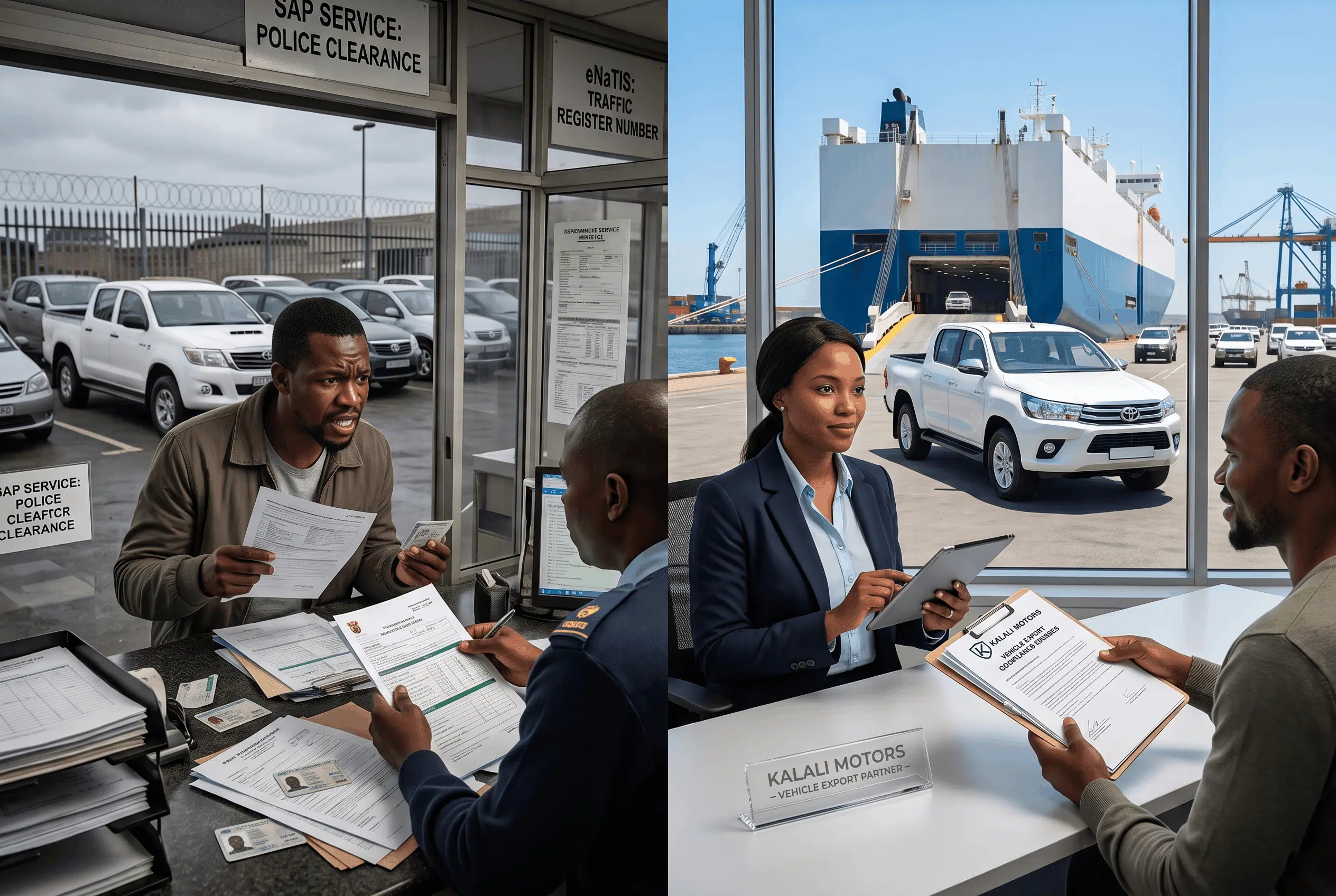
Police clearance. Every vehicle exported from South Africa must pass a South African Police Service clearance. The SAPS officer physically verifies the vehicle’s identification numbers and confirms the vehicle is not flagged. This takes three to seven working days and applies to all vehicles without exception.
Export documentation. Following police clearance, the vehicle’s registration is converted for export and all compliance paperwork is prepared. This step must be accurate before the vehicle departs. Documentation inconsistencies cause delays at South African exit points and destination ports alike.
For full details of what South Africa export documentation involves: Documents Required to Export a Car from South Africa
SARPCCO clearance. For all SADC-bound vehicles, SARPCCO clearance is required. This applies to Ranger exports to Zimbabwe, Zambia, Botswana, Mozambique, Namibia, and Tanzania. For a full explanation of the process: Complete Guide to SARPCCO Clearance for Vehicle Export from South Africa
Pre-shipment inspection. For Kenya-bound vehicles, QISJ inspection is mandatory. For Uganda-bound vehicles, a PVoC inspection is required. For Mozambique-bound vehicles, Intertek inspection applies. These must be arranged and completed before the shipping date is confirmed.
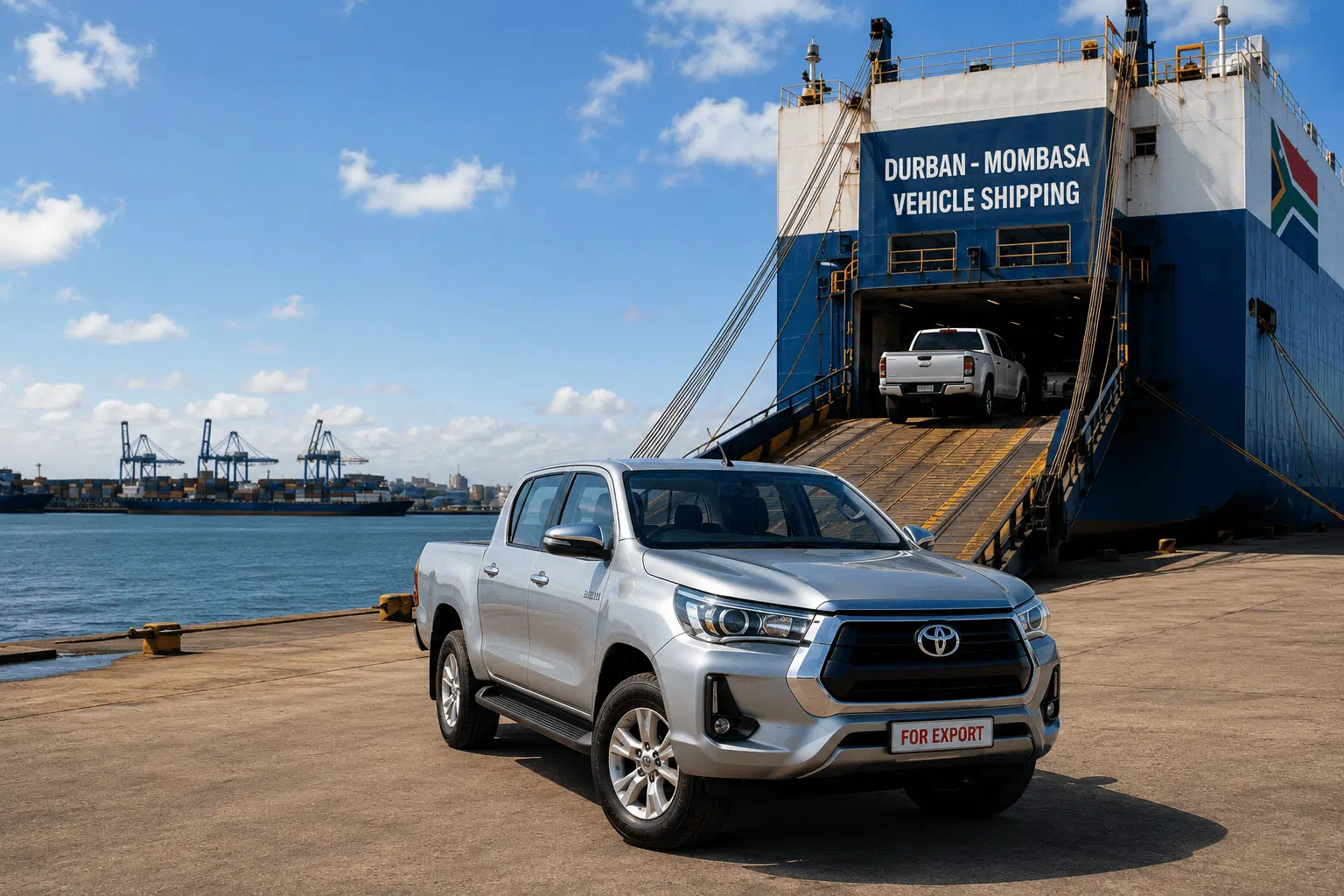
Shipping. For sea freight destinations such as Tanzania and Kenya, the Ranger is loaded at Durban and shipped to Dar es Salaam or Mombasa. For road transport destinations such as Zimbabwe, Zambia, Botswana, Mozambique, and Namibia, vehicle carriers depart from the Gauteng and Pretoria area. For a comparison of shipping methods: RORO vs Container Shipping from South Africa
The full South Africa export procedure is explained here: Export Procedure
Delivery Timelines by Destination
| Destination | Transport Method | Approximate Total Timeline |
| Zimbabwe (Beitbridge) | Road transport | 2 to 3 weeks |
| Zambia (Chirundu or Kazungula) | Road transport | 2 to 4 weeks |
| Botswana (Tlokweng) | Road transport | 2 to 3 weeks |
| Mozambique (Ressano Garcia) | Road transport | 3 to 4 weeks |
| Namibia (via Orange River crossings) | Road transport | 3 to 5 weeks |
| Tanzania (Dar es Salaam) | Sea freight | 5 to 7 weeks |
| Kenya (Mombasa) | Sea freight | 5 to 7 weeks |
| Uganda (via Mombasa or Dar) | Sea freight plus road | 7 to 9 weeks |
For a full breakdown of how timeline works at each stage: How Long Does It Take to Import a Car from South Africa?
Country-Specific Import Guides for Ranger Buyers
The import process at your destination is a separate set of requirements from the South Africa export process. Guides for each main destination:
- How to Import a Car from South Africa to Zimbabwe
- How to Import a Car from South Africa to Zambia
- How to Import a Car from South Africa to Botswana
- How to Import a Car from South Africa to Mozambique
- How to Import a Car from South Africa to Namibia
- How to Import a Car from South Africa to Tanzania
- How to Import a Car from South Africa to Kenya
- All countries Kalali Motors exports to
For a comparison of import duty rates across all destinations: Vehicle Import Duties from South Africa: Complete SADC Country Comparison (2026)
Is It Safe to Buy a Ford Ranger Through a South African Exporter?
The Ranger is one of South Africa’s most hijacked vehicles according to SAPS 2025 and early 2026 data, which means police clearance and VIN verification are especially important for this model. A buyer purchasing a Ranger that has been stolen, cloned, or flagged will face confiscation at the border regardless of what they paid for it.
Working with an experienced export broker who performs thorough VIN checks, confirms police clearance, and verifies finance clearance before payment removes this risk. The South Africa market has sufficient legitimate Ranger inventory that there is no need to take shortcuts on verification.
For a complete guide to identifying and avoiding vehicle export fraud: How to Avoid Vehicle Export Scams from South Africa
How Kalali Motors Sources and Exports the Ford Ranger
Kalali Motors sources vehicles across a network of over 6,000 verified South African dealers and suppliers including Ford franchise dealerships, certified pre-owned programmes, and established independent dealers. For buyers seeking a specific Ranger variant, this network access means more options are available than what appears on public listings at any given time.
The process starts with the buyer’s specification. Engine preference, body style, grade, transmission, drivetrain, year range, and budget are all taken into account before the sourcing process begins. Once a matching vehicle is identified, the team arranges physical inspection, police clearance, SARPCCO clearance for SADC destinations, pre-shipment inspection for countries that require it, and full shipping coordination.
Jubilate Lema, Kalali Motors’ managing director, has years of cross-border vehicle export experience across Southern and East Africa. The company operates with offices in South Africa, Tanzania, and Zimbabwe, giving the team operational knowledge of both the South Africa export process and the destination-side requirements across all primary markets.
For the full range of export and compliance services: Export Paperwork and Compliance
For context on sourcing from South Africa versus other markets: Why South Africa
To discuss a specific Ranger variant or get a sourcing quote: Contact Kalali Motors
The updated 2026 Ford Ranger range starts at R590,000 for the Single Cab XL 2.0 SiT 4×2 automatic. Double Cab variants range from approximately R745,000 for the XL through to over R1,180,000 for the Platinum. The Ranger Raptor is priced at R1,299,000. Ford South Africa’s official pricing is available at ford.co.za. Used Ranger double cabs from 2021 to 2023 in Wildtrak or XLT specification range from approximately R480,000 to R750,000 on the used market depending on mileage, variant, and condition.
For most African markets the 3.0-litre V6 turbodiesel is the recommended engine for buyers who need towing capacity, heavy load capability, or performance in demanding terrain. It produces 184kW and 600Nm and offers a braked towing capacity of 3,500kg. For buyers with primarily urban or paved-road use, the 2.0-litre SiT diesel is more fuel efficient and more accessible in price. The new 2.3-litre EcoBoost petrol suits buyers in markets with reliable petrol availability who want high performance. For remote operations where mechanical simplicity matters most, the Toyota Hilux may be a more practical choice due to wider parts availability.
Ford discontinued the 2.0-litre BiTurbo engine in the updated 2026 South Africa Ranger range. It has been effectively replaced by the 3.0-litre V6 turbodiesel, which is now available across more variants including the Sport and Wildtrak. Buyers who previously chose the BiTurbo for its performance should now consider the 3.0 V6, which produces more power and torque while offering permanent 4×4 capability.
The answer depends on your use case. The Ford Ranger offers a more feature-rich interior, higher towing capacity on V6 derivatives, and better technology integration across mid-range variants. The Toyota Hilux offers better fuel economy, wider parts availability across African markets especially in remote areas, simpler mechanical architecture for remote repairs, and stronger resale value across the continent. For urban commercial and personal use, the Ranger is a strong choice. For rural, agricultural, NGO, or remote commercial applications the Hilux is the more practical option.
For road transport destinations like Zimbabwe and Zambia, the full process from purchase to delivery typically takes 2 to 4 weeks. Police clearance and export documentation in South Africa take approximately 1 to 2 weeks. Road transport and destination-side clearance add a further 1 to 2 weeks depending on the border crossing and documentation readiness.
Yes. New Ranger models are available from Ford’s Silverton-built range through franchised Ford dealers across South Africa. Kalali Motors can source new Ranger vehicles to buyer specification through the Ford South Africa dealer network. New vehicles come with Ford’s 6-year or 90,000km service plan as standard on the updated 2026 range.