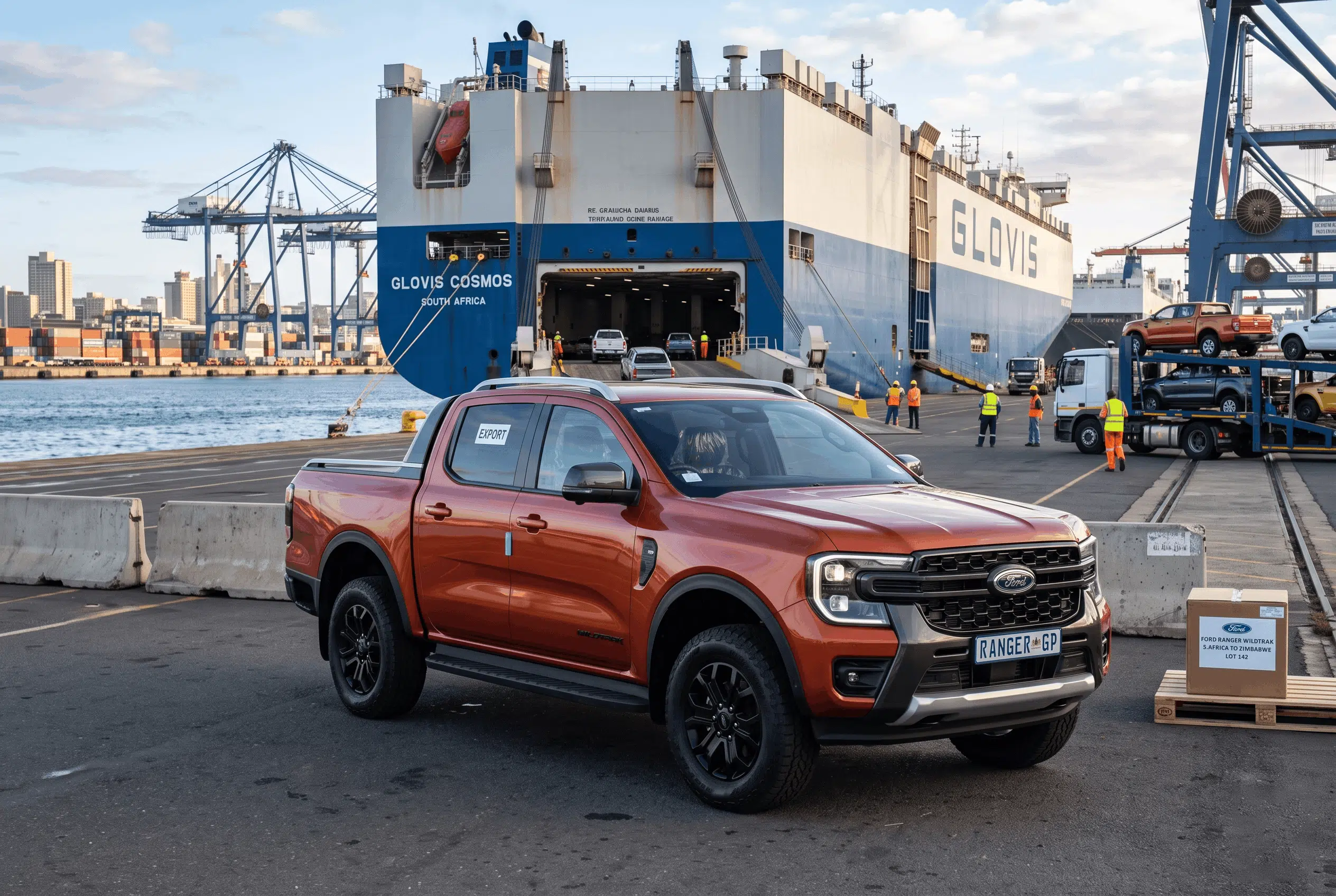

When buyers across East and Southern Africa decide to source a vehicle from South Africa, one of the first questions they face is whether to work through a broker or go directly to a South African dealer. The logic of going direct seems appealing at first. Cut out the middleman, save money, deal with the source. It is a reasonable instinct for any buyer.
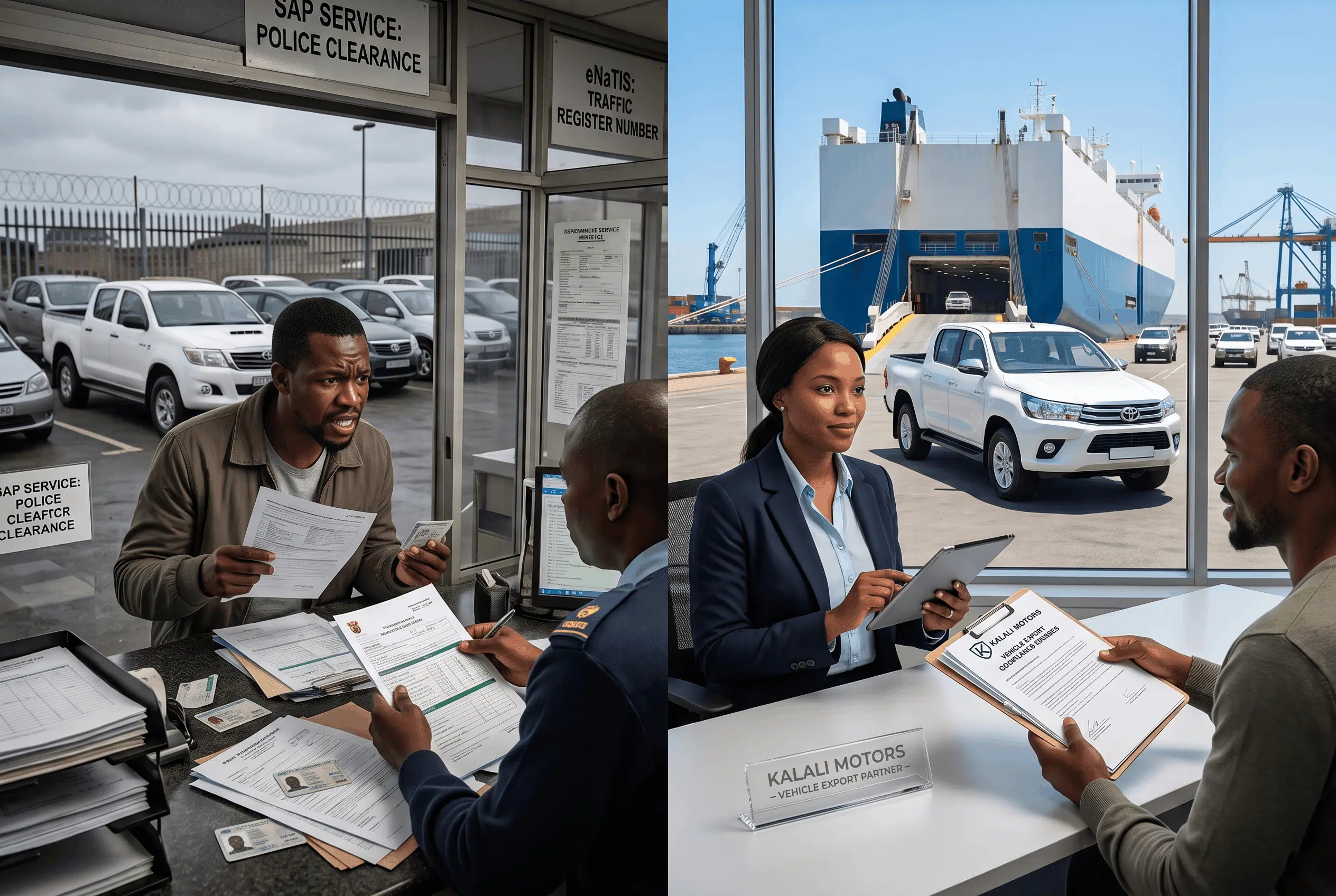
The reality is more complicated. South Africa’s vehicle export process involves a specific sequence of compliance steps that are not part of a normal local sale. A South African dealer’s job is to sell and register vehicles for South African buyers. Helping a foreign buyer navigate police clearance, SARPCCO certificates, SAPS inspections, export documentation, destination country compliance, and international shipping is typically outside their core scope and, in many cases, outside their expertise.
This guide compares both options honestly. It covers what each route actually involves, where the real cost differences are, where the risk sits in each case, and which type of buyer each approach genuinely suits.
What Buying Directly from a South African Dealer Actually Involves
The term “buying directly” suggests simplicity. In practice, a foreign buyer purchasing from a South African dealer independently is managing a multi-step cross-border logistics and compliance chain without the expertise to do it efficiently.
Here is what a foreign buyer must handle personally when going direct:
Finding a legitimate dealer. South Africa has over 6,000 registered dealers, plus thousands of unregistered private sellers and informal traders. Without a local network or market knowledge, a foreign buyer cannot reliably distinguish between a credible franchised dealership, a reputable independent dealer, and a fraudulent listing. This is not an abstract risk. Vehicle export fraud targeting foreign buyers is a documented and growing problem in South Africa.
Getting loaded onto eNaTIS. To buy and register a vehicle in South Africa as a foreigner, you must first be registered on the National Transport Information System, known as eNaTIS. This requires obtaining a Traffic Register Number from a South African traffic department, which involves in-person attendance, certified documentation, and a process that can take up to six weeks. Without a TRN, a foreigner cannot register a vehicle in their own name in South Africa.
Arranging police clearance independently. Every vehicle exported from South Africa must pass a South African Police Service clearance. This requires knowing which SAPS stations handle vehicle clearances, what documentation to bring, how long to allow, and what to do if complications arise. For a buyer who has flown to South Africa for this purpose, delays of three to seven working days per vehicle can be costly.
Obtaining SARPCCO clearance. For vehicles destined for SADC countries including Tanzania, Zimbabwe, Zambia, Botswana, Mozambique, and Namibia, a SARPCCO Motor Vehicle Clearance Certificate is required. Most South African dealers have no involvement in this process and no established relationships with the relevant authorities.
Arranging pre-shipment inspection. For Kenya-bound vehicles, a QISJ pre-shipment inspection is mandatory. For Uganda-bound vehicles, a PVoC inspection is required. For Mozambique-bound vehicles, Intertek inspection is required. Identifying the correct inspection body, booking the inspection, and receiving the certificate in time to meet the shipping date requires knowledge of each country’s specific requirements.
Booking and managing shipping. The buyer must independently identify a freight forwarder, understand the difference between RORO and container shipping, book vessel space, arrange marine insurance, receive and verify the bill of lading, and coordinate delivery to the destination port. Errors in shipping documentation can result in vehicles held at destination ports for weeks.
Managing export documentation. All export compliance paperwork must be accurate and complete before the vehicle departs. Name inconsistencies, incorrect ID numbers, or mismatched VIN details between documents cause delays that cannot be resolved quickly from another country.
Handling destination-side clearance without support. Once the vehicle arrives at the destination port, the buyer is managing customs clearance in their home country independently, without any continuity of support from the South Africa side of the transaction.
Each of these steps is manageable individually. Managing all of them simultaneously, without local knowledge, established relationships, or prior experience of the process, is where most independent buyers run into serious problems.
What a Vehicle Export Broker Provides
A vehicle export broker handles the South Africa side of the cross-border vehicle transaction as a coordinated service. The buyer specifies their requirements and the broker manages the sequence of compliance and logistics steps between purchase and delivery at the destination country.
The specific services a competent export broker provides:
Vehicle sourcing across a broad network. Kalali Motors, for example, has access to over 6,000 verified dealers and suppliers across South Africa. This is not access limited to what is currently listed on public platforms. It includes dealer network relationships, certified pre-owned programmes, and fleet disposal channels that an outside buyer cannot reach independently. For common models like the Toyota Hilux or Land Cruiser, this means more options at more price points than a buyer researching publicly listed inventory will find.
Physical inspection before purchase. A broker physically inspects the vehicle before the buyer commits to payment. This includes checking VIN and engine number alignment, service history, condition against the stated description, and any undisclosed accident history. For a buyer in Nairobi or Kampala who cannot travel to South Africa to inspect in person, this is the most important risk-reduction service in the entire process.
Finance and history verification. A broker confirms there is no outstanding finance registered against the vehicle and that it has not been written off or flagged in the eNaTIS system. A buyer purchasing directly without this check can legally own a vehicle that a finance company repossesses.
Police clearance management. The broker manages the SAPS police clearance process, including knowing which stations to use, how long to allow, and how to handle complications. This is a routine part of every export and is handled without the buyer needing to understand the process.
SARPCCO clearance coordination. For SADC-bound vehicles, the broker manages SARPCCO clearance through established channels. This is a routine step for experienced exporters and a complex unknown for buyers attempting it independently for the first time.
Pre-shipment inspection coordination. For Kenya, Uganda, Mozambique, and other countries with mandatory pre-shipment inspection requirements, the broker arranges the inspection with the correct appointed body, ensures the certificate is issued in time, and includes it in the shipping documentation package.
Export documentation preparation. All compliance paperwork is prepared accurately and verified before the vehicle departs. This removes the most common single cause of delays at both South African exit points and destination ports.
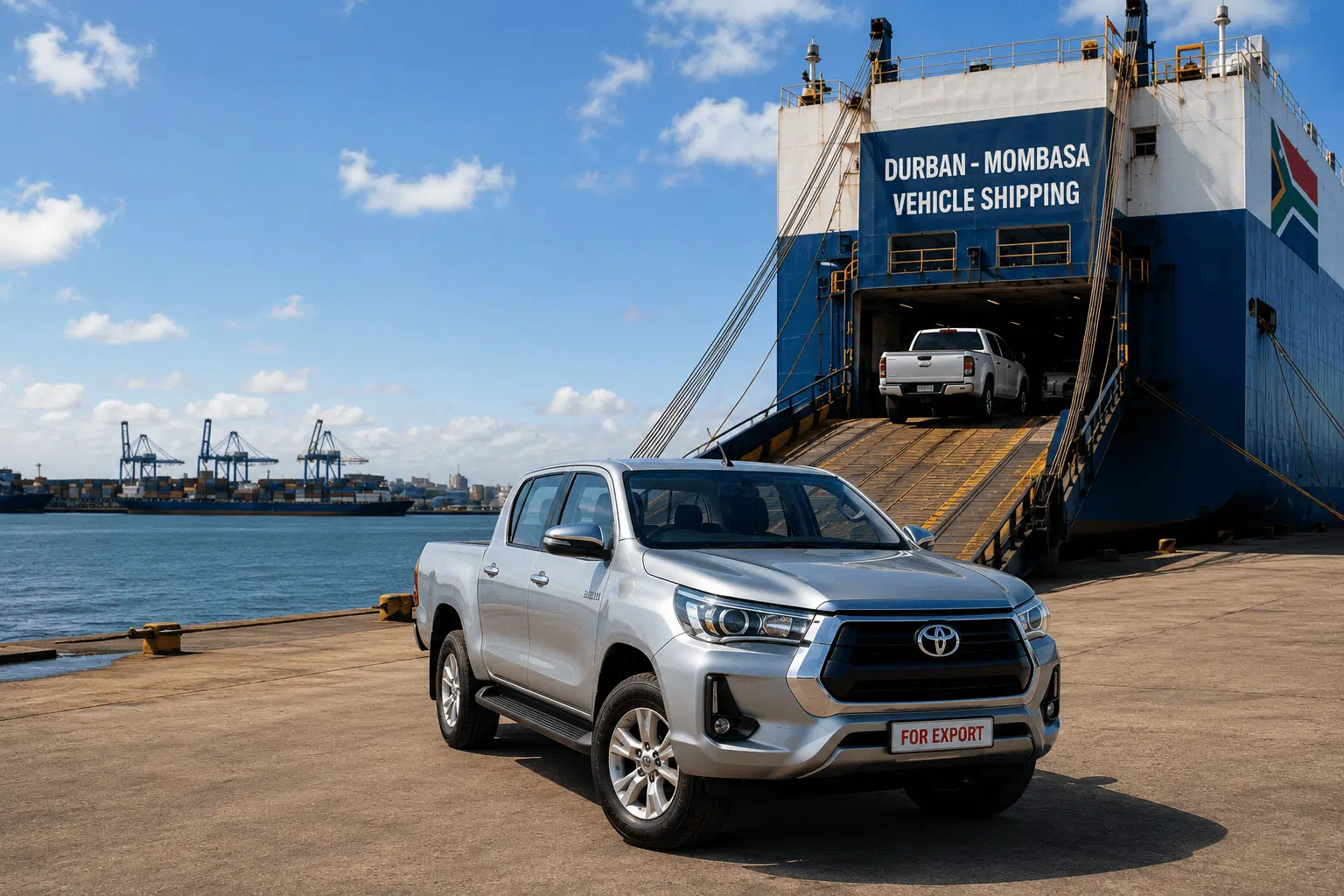
Shipping coordination and tracking. The broker books vessel space, arranges marine insurance, coordinates loading at Durban, and provides the buyer with shipping confirmation and tracking references.
Destination-side guidance. An experienced broker provides buyers with guidance on what to expect at the destination port, what documents the clearing agent will need, and what timelines are realistic. For country-specific processes this guidance is based on real operational experience rather than generalised advice.
The Cost Comparison: Is Going Direct Actually Cheaper?
This is where buyers most often get the calculation wrong. The assumption is that using a broker adds cost in the form of a brokerage fee. The reality is that the total cost difference between the two routes is usually smaller than expected, and in many cases the independent route ends up costing more.
Here is why:
Broker fees are typically built into a service package. A broker does not simply add their fee on top of the same vehicle price a buyer would find independently. Their network access means they can source vehicles at competitive prices that are not available on public platforms. The service fee covers the entire compliance and coordination chain, not just an administrative margin on a price a buyer could find themselves.
The cost of errors falls entirely on the independent buyer. When a directly purchased vehicle fails police clearance because of a documentation issue, the buyer bears 100 percent of the remediation cost. When a vehicle arrives at Mombasa or Dar es Salaam without a required pre-shipment certificate, the penalty falls on the buyer. When port storage accumulates because documentation is incomplete, every day costs money. These costs are real and not uncommon for buyers managing the process independently for the first time.
Time has a cost. A buyer who travels to South Africa to manage a direct purchase spends on flights, accommodation, and extended time away from their business. A buyer in Nairobi managing a direct export process by remote communication with a South African dealer spends weeks on coordination that an experienced broker resolves in days through established relationships.
Destination-side problems trace back to South Africa-side preparation. Clearing agents at destination ports charge more and take longer when the documentation from South Africa is inconsistent or incomplete. An experienced export broker’s thorough documentation package directly reduces the cost and time of destination-side clearance.
A fair summary is this: a broker adds a transparent service cost. An independent purchase adds an opaque risk cost that materialises in ways and at moments the buyer cannot fully anticipate.
Where Independent Buying Makes Sense
To be balanced, there are buyers for whom the independent route is a legitimate choice.
A buyer who is physically present in South Africa for an extended period, has established local contacts, understands the eNaTIS system, and has prior experience of the export compliance process can manage a direct purchase effectively. This profile typically applies to returning Zimbabwean or Zambian residents who have completed the process before and know which service providers to use at each stage.
A buyer sourcing a vehicle for use in South Africa itself rather than for export does not need export compliance at all. In that case, a South African dealer is the obvious choice and a broker adds nothing.
A buyer sourcing multiple vehicles regularly over time, who has built their own South Africa supply chain and relationships, reaches a point where the incremental value of a broker decreases. Most buyers in this category started with broker support and transitioned to independent sourcing after accumulating experience over several completed transactions.
For first-time importers, buyers sourcing for a new destination country, or buyers for whom a documentation error would be financially serious, the broker route is the lower-risk option by a clear margin.
The Specific Value at Each Stage of the Process
| Stage | Independent Buyer | With Export Broker |
| Vehicle sourcing | Limited to public listings | Access to 6,000 plus verified suppliers |
| Inspection | Remote or self-managed | Physical inspection by local representative |
| Finance verification | Buyer’s responsibility | Handled by broker |
| Police clearance | Buyer arranges independently | Managed by broker through established channels |
| SARPCCO clearance | Buyer must identify and initiate | Managed by broker as standard |
| Pre-shipment inspection | Buyer must identify correct body per country | Coordinated by broker with correct appointed inspector |
| Export documentation | Prepared by buyer or ad hoc dealer | Prepared completely and verified |
| Shipping | Independently arranged | Coordinated with vessel booking and tracking |
| Marine insurance | Buyer arranges separately | Included in service coordination |
| Destination guidance | None | Based on real operational experience per country |
What to Look for in a Vehicle Export Broker
If you decide to work through a broker, the quality of the broker matters as much as the decision to use one. The following are the specific indicators of a credible, experienced South Africa vehicle export broker.
Verifiable physical presence. A legitimate broker has a physical address, a landline number, and a business email on a registered domain. They can be found through independent searches that predate your inquiry.
Documented export compliance knowledge. Ask the broker to explain the police clearance process, SARPCCO clearance, and the pre-shipment inspection requirement for your destination country. An experienced broker answers these questions in detail without hesitation.
Transparency on costs. A credible broker provides an itemised quote covering vehicle cost, compliance fees, shipping, and any other applicable charges before the process begins. No costs appear unexpectedly after payment.
References from your destination market. A broker with active experience in Tanzania, Kenya, Zimbabwe, or your destination country can speak to specific requirements at the destination port, not just the South Africa export side.
Company registration. Registered South African companies have a registration number from the Companies and Intellectual Property Commission that can be verified at cipc.co.za.
For a full guide to identifying legitimate exporters and avoiding fraud: How to Avoid Vehicle Export Scams from South Africa
How Kalali Motors Approaches This
Kalali Motors operates as a vehicle export broker and one-stop-shop for buyers across SADC and EAC markets. The company sources vehicles from a verified network of over 6,000 South African dealers and suppliers, handles all export compliance including police clearance and SARPCCO, coordinates pre-shipment inspections for countries that require them, manages shipping from Durban, and provides buyers with guidance on destination-side clearance based on direct operational experience.
The company operates with offices in South Africa, Tanzania, and Zimbabwe. This three-country presence reflects the reality that serving buyers in East and Southern Africa properly requires operational knowledge on both sides of the transaction, not just in South Africa.
Jubilate Lema, Kalali Motors’ managing director, explains the company’s position simply: “Our mission is to build trust and connect South Africa with the rest of Africa.” That mission is not served by making the process more complex for buyers. It is served by making it simpler, safer, and more transparent than any alternative available to buyers researching the South African market independently.
For buyers who want to understand the full range of services before making a decision: Export Paperwork and Compliance
For buyers ready to discuss a specific vehicle and destination: Contact Kalali Motors
To browse currently available vehicle inventory: Used Cars
For an overview of why South Africa is the preferred sourcing market for the region: Why South Africa
A vehicle export broker sources vehicles on behalf of foreign buyers from South Africa’s dealer and supplier network, manages all South Africa-side export compliance including police clearance and SARPCCO clearance, coordinates pre-shipment inspections where required, arranges shipping from Durban, and provides guidance on destination-side clearance. The broker acts as the buyer’s representative and point of coordination throughout the entire transaction, replacing the need for the buyer to manage multiple independent service providers across a process they are typically unfamiliar with.
Not necessarily, and for most first-time importers the independent route is more expensive in total. A broker’s service fee is a known, transparent cost. An independent buyer’s costs include not only the vehicle and shipping but also the risk of errors in documentation, penalties for missing pre-shipment inspections, port storage costs from delayed clearance, and the time cost of managing an unfamiliar process from another country. Brokers also access vehicle inventory through supplier networks that are not available on public platforms, which can offset the service fee through better sourcing prices.
You are not legally required to use a broker. However, the South Africa vehicle export process involves a specific compliance chain including police clearance, SARPCCO clearance, pre-shipment inspection (mandatory for Kenya and Uganda), and export documentation that most South African dealers do not manage for foreign buyers. Without prior experience of this process or local contacts in South Africa to manage it, independent buyers regularly encounter delays and costs that an experienced broker avoids through established processes and relationships.
A South African car dealer’s primary business is selling and registering vehicles for South African buyers. Their expertise is in the domestic sale process. A vehicle export broker’s primary business is managing the cross-border transaction for foreign buyers, including all compliance steps that apply specifically to export. Some dealers have export capability, but most do not handle the full chain of SAPS clearance, SARPCCO clearance, pre-shipment inspection, international shipping, and documentation that a dedicated export broker manages as a standard service.
Check that the company has a verifiable physical address, a Companies and Intellectual Property Commission registration number verifiable at cipc.co.za, a business email on a registered domain, and a history that predates your inquiry. Ask the broker to explain the police clearance and SARPCCO process for your destination country in detail. A legitimate broker answers these questions fluently and provides an itemised written quote covering all costs before any payment is requested.
If documentation is incorrect or incomplete at the South African exit point, the vehicle will be held and cannot cross until the issue is resolved. If it reaches the destination port with missing documentation, such as an absent pre-shipment certificate for Kenya, the penalty at clearance is significant and storage costs accumulate until resolution. These problems are almost always preventable with thorough documentation preparation before shipment, which is part of what an experienced export broker provides.