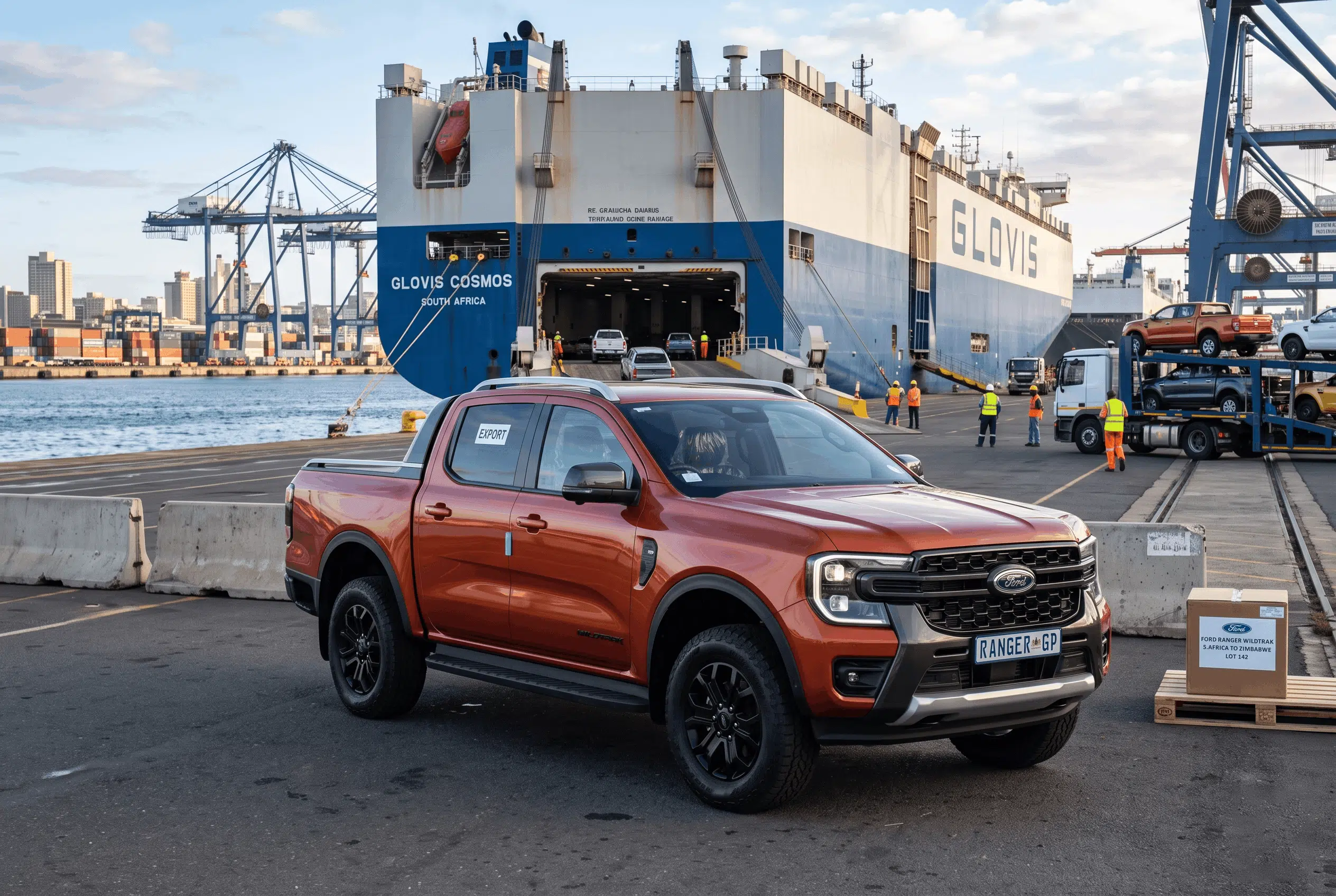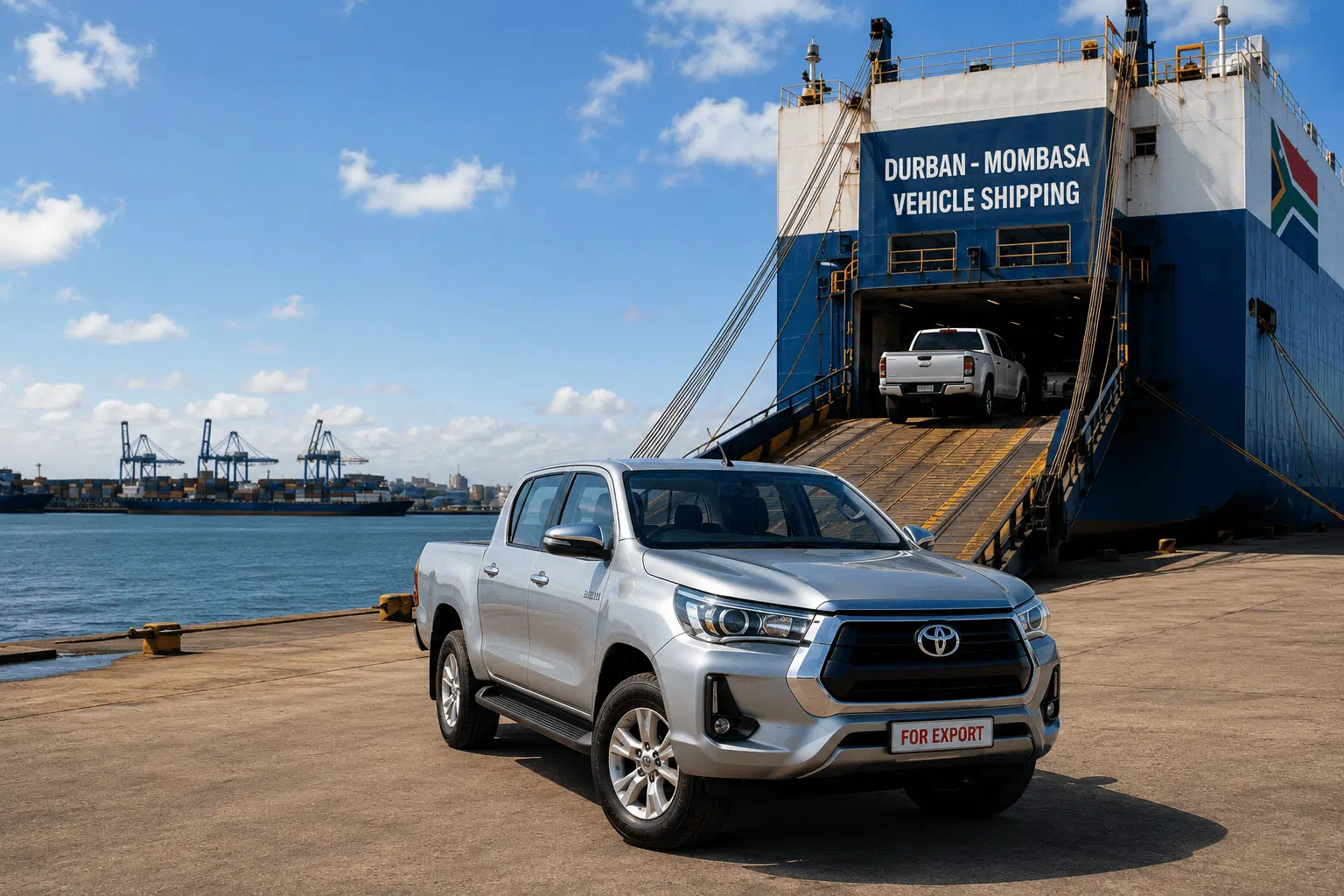


Importing a car from South Africa to Kenya is one of the most practical decisions a Kenyan buyer can make in 2026. South Africa is one of only six countries globally that the Kenya Bureau of Standards has approved for vehicle exports, which means vehicles sourced here already meet the inspection and roadworthiness requirements at the Kenyan border before they even leave port.
The demand is real and growing. Kenya imports between 70,000 and 80,000 vehicles annually, with roughly 80 percent of those being used vehicles. A significant share now comes through South Africa, and for clear reasons. The vehicles are right-hand drive, road-tested in similar African conditions, come with verifiable service history, and can be physically inspected before they leave the country.
That said, importing is not a casual exercise. Kenya has one of the most structured vehicle import regulatory frameworks in East Africa. The Kenya Revenue Authority, the Kenya Bureau of Standards, and the National Transport and Safety Authority all play a role in clearing your vehicle. Each has its own requirements, timelines, and potential sticking points.
This guide walks you through every stage of the process so you know exactly what to expect, what to budget, and what to prepare before your vehicle leaves Durban.
Why South Africa Is a Smart Sourcing Market for Kenyan Buyers
Before diving into process, it helps to understand why South Africa specifically makes sense compared to other popular options like Japan or the UAE.
South Africa is on the KEBS-approved inspection list. This means vehicles exported from here can receive a Certificate of Roadworthiness from a QISJ-certified inspector before shipment, which has been mandatory for all used vehicle imports entering Kenya since January 2026. If your vehicle comes from a country not on that approved list, the clearance process at Mombasa becomes significantly more complicated and expensive.
Beyond paperwork, South Africa offers practical advantages that matter long after the purchase is done. The automotive market here runs entirely on right-hand drive vehicles, which Kenya requires. Models like the Toyota Hilux, Toyota Land Cruiser, Ford Ranger, and Isuzu D-Max are widely available in configurations that handle the terrain Kenyan roads demand. Spare parts for these vehicles are accessible in Nairobi, Mombasa, and regional towns across the country.
There is also the inspection advantage. Unlike Japan or Dubai, where buyers rely on auction grading reports and remote photographs, South Africa allows physical inspection before export. For a purchase involving hundreds of thousands of shillings, being able to verify the vehicle with your own agent before it ships is a meaningful difference.
You can read more about what makes South Africa a preferred sourcing market on this page: Why South Africa
If you are weighing South Africa against Japan specifically, this comparison covers both markets in detail: Japan vs South Africa Car Imports: Which Is Better for African Buyers
Kenya’s 2026 Import Rules: What Changed and What It Means
Kenya tightened its vehicle import regulations significantly at the start of 2026. Ignoring these changes can result in rejection at the port, duty penalties, and clearance delays that stretch for weeks.
The 8-year age limit is now strictly enforced. As of January 1, 2026, only right-hand drive vehicles first registered from January 1, 2019 and later are permitted entry. This follows a Kenya Bureau of Standards notice issued in November 2025 under the KS 1515:2000 standard. The rule applies to private buyers, returning residents, and dealers alike, with no exceptions for vehicle condition.
The Certificate of Roadworthiness is now mandatory before shipping. KEBS has appointed QISJ to issue and verify this certificate. Every used vehicle must pass a pre-shipment roadworthiness inspection in the country of export. For South Africa-sourced vehicles, this takes place in South Africa before the car is loaded. Arriving at Mombasa without this certificate triggers a 15 percent penalty on total import duty, plus delays.
KRA updated its Current Retail Selling Price schedule in July 2025. The CRSP is the benchmark value KRA uses to calculate your import duty, not simply what you paid for the vehicle. The updated schedule, effective July 1, 2025, revised values upward for many popular models. This means your actual duty obligation may be based on a higher figure than your invoice price for certain vehicles.
Left-hand drive vehicles remain banned for private use. South Africa is an RHD market, so standard vehicles sourced here already comply. The only LHD exemptions cover ambulances, fire tenders, and large construction equipment donated to the Kenyan government.
Step 1: Choose and Verify the Right Vehicle
Everything starts with selecting a vehicle that will clear Kenyan import requirements before any payment is made.
The most common vehicles Kenyan buyers source from South Africa include:
- Toyota Hilux (double cab and single cab)
- Toyota Land Cruiser (70 Series and 200 Series)
- Toyota Fortuner
- Ford Ranger
- Isuzu D-Max
- Nissan Navara
Before committing to a purchase, confirm the following on every vehicle:
- First registration date is 2019 or later to meet the 8-year limit
- VIN and engine numbers match the registration documents exactly
- No outstanding finance on the vehicle
- The vehicle has not been written off or flagged in the national system
- Service history is documented and verifiable
Purchasing independently without verification at this stage is where many buyers run into problems. A vehicle that fails police clearance or QISJ inspection in South Africa cannot be exported, and recovering your money from a private seller becomes a complicated process.
You can browse used inventory currently available through Kalali Motors here: Used Cars
For new vehicles, options are available here as well: New Cars
Step 2: Pre-Shipment Inspection and Certificate of Roadworthiness
This step is non-negotiable for Kenya-bound vehicles under 2026 rules.
Before the vehicle is loaded onto a vessel, it must be inspected by a QISJ-certified agent in South Africa. QISJ is the KEBS-appointed inspection body authorised to issue Certificates of Roadworthiness for vehicles exported from South Africa to Kenya.
The inspection confirms the vehicle meets KS 1515:2000 standards, satisfies the 8-year age requirement, and is structurally roadworthy. Pre-shipment inspection typically costs between $150 and $250. Without it, you face a 15 percent penalty on your full import duty at Mombasa, in addition to clearance delays that can stretch for weeks while the vehicle sits in port storage at your cost.
If you are working with an export facilitator, they will coordinate this inspection as part of the export process. If managing independently, the QISJ inspection must be booked and completed before the vessel booking is confirmed.
Step 3: South Africa Export Compliance
Once the vehicle is verified and the pre-shipment inspection is complete, it must clear South Africa’s export process before it can leave.
Police clearance is the first requirement. A South African Police Service officer physically inspects the vehicle, verifies the VIN and engine numbers against national records, and confirms the vehicle is not stolen or flagged. This is mandatory for every vehicle leaving South Africa, without exception. The process typically takes between three and seven working days depending on the SAPS station and current processing volumes.
Export documentation follows once police clearance is issued. This covers converting the vehicle’s registration status for export and preparing all cross-border compliance paperwork. Accuracy here is critical. Name mismatches, incorrect ID numbers, or VIN discrepancies between documents will cause delays at South African exit points and again at Mombasa.
For a detailed breakdown of how South Africa’s export documentation and compliance process works, this guide covers it in full: Export Procedure
You can also review the specific documents required on the South African side here: Documents Required to Export a Car from South Africa
Step 4: Shipping from South Africa to Kenya
Kenya-bound vehicles ship through Mombasa’s Kilindini Harbour, East Africa’s largest and busiest container port.
Vehicles from South Africa depart from the Port of Durban. Sea transit from Durban to Mombasa takes approximately 10 to 14 days under normal shipping conditions. The two main shipping methods are container shipping and RORO (roll-on roll-off). Container shipping offers more protection for a single vehicle. RORO is typically more cost-efficient for fleet or multiple unit shipments.
This guide explains the difference between the two methods and which one makes more sense depending on your situation: RORO vs Container Shipping from South Africa: Which Is Better for Exporting Your Car?
A single container shipment from Durban to Mombasa typically costs between $800 and $1,500 depending on the season and shipping line. This freight cost feeds directly into your CIF value, which is the basis for KRA duty calculation at the other end.
Marine insurance during transit is also required and costs approximately 1 to 2 percent of the vehicle’s CIF value. Do not skip this step. Damage during transit is not covered without it, and a claim situation without marine insurance leaves you with no recourse.
For a realistic view of how long the overall import process takes from purchase to delivery, this post breaks it down by stage: How Long Does It Take to Import a Car from South Africa?
Step 5: Understanding KRA Import Duty and Total Cost
This is where many buyers get an unwelcome surprise. Import duty in Kenya is not a single percentage applied to your purchase price. It is a stacked calculation involving five separate levies applied in sequence, and the base value used is KRA’s own CRSP, not your invoice.
As of 2026, the full KRA duty structure on a standard used vehicle is:
| Levy | Calculation Basis | Rate |
|---|---|---|
| Import Duty | CIF value (Cost + Insurance + Freight) | 25% |
| Excise Duty | CIF + Import Duty | 20% for engines up to 1,500cc / 25% above 1,500cc |
| VAT | CIF + Import Duty + Excise Duty | 16% |
| Import Declaration Fee (IDF) | CIF value | 3.5% |
| Railway Development Levy (RDL) | CIF value | 2% |
The CIF value is based on KRA’s Current Retail Selling Price for your specific make, model, age, engine size, and fuel type, using the updated schedule that took effect July 1, 2025. For popular models like the Toyota Hilux or Land Cruiser, this CRSP value may be higher than your actual purchase price, pushing the effective duty calculation upward.
As a practical example: a Toyota Hilux Double Cab with a KRA-assessed CIF value of KES 2,500,000 would attract import duty of KES 625,000, excise duty of approximately KES 781,250 (at 25% for an engine above 1,500cc), VAT of roughly KES 624,200, plus IDF and RDL on top. Total duties and taxes on this single vehicle could exceed KES 2,100,000.
For a broader understanding of the total cost to import from South Africa before you get to Kenyan duty, this breakdown covers all the South Africa-side costs: How Much Does It Cost to Import a Car from South Africa?
Use the KRA Import Duty Calculator at kra.go.ke with your specific vehicle details before committing to any purchase. Always work with a licensed clearing agent to verify the final figure, since the CRSP your agent runs will be more accurate than any online estimate.
Step 6: Clearing the Vehicle at Mombasa Port
When the vessel arrives at Kilindini Harbour, your vehicle enters the formal KRA clearance process.
Engaging a licensed customs clearing agent is mandatory, not optional. KRA requires all import declarations to be submitted through its Integrated Customs Management Systems, known as iCMS, by a licensed agent. There is no self-clearance option. A list of KRA-authorised clearing agents is available on the KRA website at kra.go.ke.
Your clearing agent will require the following documents to process your declaration:
- Original South African logbook in English
- Certificate of Roadworthiness from QISJ
- Export certificate and deregistration documents from South Africa
- Bill of lading
- Commercial invoice or bill of sale
- Import Declaration Form
- Your KRA PIN certificate
- Proof of identification (passport or national ID)
One point that catches many buyers: KRA does not accept a Certificate of Export issued by Dubai Police or any other non-originating authority as a substitute for an original logbook. For South Africa-sourced vehicles, the original SA registration documents or properly issued export certificate must be in order. Leaving South Africa without these documents means a complicated and expensive retrieval process.
On top of KRA duties, port handling charges at Mombasa add further to your total. Typical additional costs include port and SGR charges of approximately KES 120,000, a verification fee of KES 15,000, an Interpol check of KES 15,000, an MSS levy of KES 2,000, and a radiation screening fee. Budget these as a separate line item from your duty calculation.
Step 7: NTSA Registration in Kenya
Once customs clearance is complete and all duties are paid, the vehicle must be registered with the National Transport and Safety Authority before it can be used legally on Kenyan roads.
For NTSA registration, you need:
- Import Declaration Form
- Customs Clearance Certificate confirming all duties paid
- Original South African logbook
- KRA PIN Certificate
- Bill of lading
- KEBS Inspection Certificate from QISJ
The NTSA assigns a Kenyan number plate and issues a local logbook. This is the final step in the entire import process, and from this point your vehicle is fully legal for use in Kenya.
Total Timeline: From Purchase to Registration
Understanding the realistic timeline helps you plan properly and avoid rushed decisions at any stage.
| Stage | Estimated Duration |
|---|---|
| Vehicle selection and verification | 3 to 7 days |
| Police clearance in South Africa | 3 to 7 working days |
| QISJ pre-shipment inspection | 4 working days |
| Export documentation preparation | 3 to 5 days |
| Sea freight: Durban to Mombasa | 10 to 14 days |
| KRA customs clearance at Mombasa | 5 to 10 working days |
| NTSA registration | 3 to 7 days |
| Total realistic range | 5 to 7 weeks |
Delays almost always trace back to documentation problems, not shipping or port congestion. Vehicles that arrive at Mombasa with a complete, accurate document set clear significantly faster than those with any missing or inconsistent paperwork.
Is It Safe to Import a Car from South Africa to Kenya?
A common concern among first-time importers is whether the process itself carries significant risk. The short answer is that it does, if you manage it without proper support, and it does not, if the process is handled correctly from the start.
The main risks in any South Africa vehicle import are purchasing a vehicle with undisclosed finance, documentation that does not survive South African export compliance, and duty calculations that differ significantly from pre-purchase estimates.
All three of these risks are manageable with proper verification and a structured export partner. This post covers the full risk picture and how to approach it: Is It Safe to Import a Car from South Africa?
How Kalali Motors Supports Kenyan Buyers
Managing this process independently is possible, but most first-time importers encounter at least one costly problem along the way. Documentation errors, missed inspection deadlines, and duty calculation surprises are the three most consistent points of failure.
Kalali Motors handles the South Africa side of the process end to end. That includes vehicle sourcing across a network of over 6,000 suppliers, physical inspection coordination, police clearance management, QISJ pre-shipment inspection arrangement, and all export documentation preparation.
The company operates with offices in South Africa, Tanzania, and Zimbabwe, giving the team a practical understanding of East African import requirements that most South Africa-based exporters do not have. Jubilate Lema, Kalali Motors’ managing director, has built direct relationships across the East African market through years of cross-border vehicle export work.
You can see the full range of services offered here: Export Paperwork and Compliance
You can also explore the countries Kalali Motors currently exports to here: Countries We Export To
If you are planning an import from South Africa to Kenya and want to understand your specific situation before committing, reach out directly: Contact Kalali Motors
As of January 1, 2026, Kenya only permits right-hand drive vehicles first registered from January 1, 2019 or later. This enforces the 8-year age limit under KEBS standard KS 1515:2000. A vehicle older than this will be rejected at Mombasa port regardless of its physical condition or price.
Kenya’s duty structure is layered across five levies. Import duty is 25 percent of CIF value. Excise duty runs 20 to 25 percent depending on engine size. VAT is 16 percent. An Import Declaration Fee of 3.5 percent and a Railway Development Levy of 2 percent are applied on top. On a mid-range SUV, total duties and taxes can easily exceed the purchase price of the vehicle itself. Use the KRA Import Duty Calculator at kra.go.ke before committing to any purchase.
Yes, and it has been strictly enforced since January 2026. Every used vehicle must carry a Certificate of Roadworthiness issued by a QISJ-certified inspector in the export country before shipment. South Africa is on the KEBS-approved country list. Arriving at Mombasa without this certificate triggers a 15 percent duty penalty and clearance delays.
The full process from purchase to NTSA registration takes five to seven weeks under normal conditions. Sea transit from Durban to Mombasa is 10 to 14 days. The remaining time is split between pre-shipment processing in South Africa and customs clearance and registration in Kenya. Documentation problems are the primary cause of delays.
No. Kenya prohibits left-hand drive vehicles for private use. South Africa is a right-hand drive market, so standard passenger vehicles and pickups sourced here already meet this requirement without modification.
Yes, it is legally required. KRA mandates that all import declarations are submitted through its Integrated Customs Management Systems by a licensed clearing agent. You cannot process clearance yourself. A list of authorised agents is available on the KRA website.
You need the original South African logbook in English, Certificate of Roadworthiness from QISJ, export certificate and deregistration documents from South Africa, bill of lading, commercial invoice, Import Declaration Form, your KRA PIN certificate, and proof of identification. Missing or inconsistent documents are the most common cause of Mombasa clearance delays.